2026 is the new 2016: when Zalando brought fashion, culture and technology together
2026 is the new 2016: when Zalando brought fashion, culture and technology together

2016 is back in the conversation. “2026 is the new 2016” has become a social-media shorthand for a wider nostalgia wave, with Vogue pointing to the return of mid-2010s aesthetics and TikTok bringing the decade-old look and mood back into circulation. And exactly ten years ago, Zalando was creating its own take on culture.
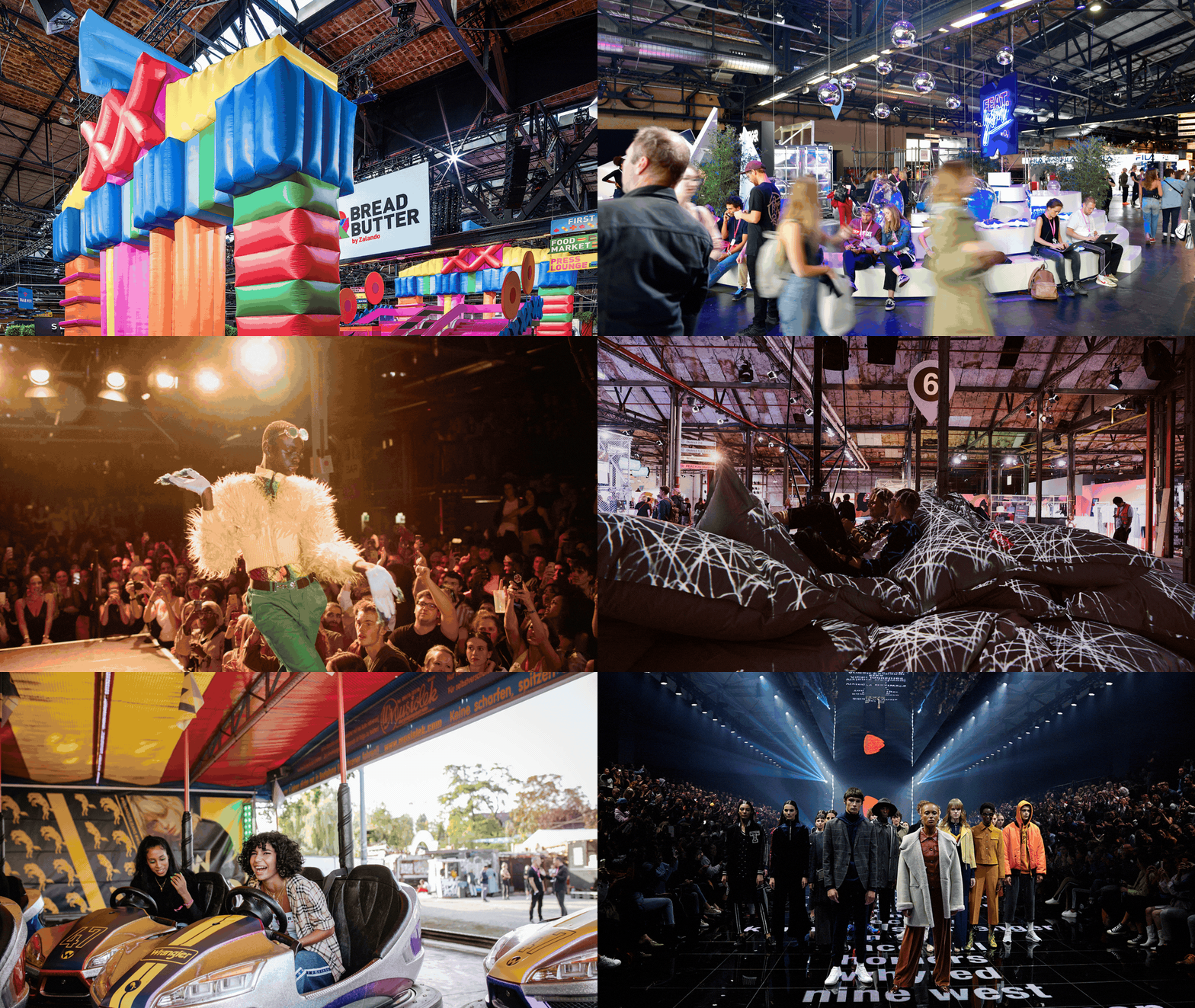
In September 2016, the first Bread&&Butter by Zalando opened at Arena Berlin. What had once been an industry trade show became a consumer-first festival bringing together fashion, music, food, technology and commerce. Zalando called the shift “from trade show to trend show”.
More than 20,000 people attended the first edition. By 2017, attendance had grown to more than 30,000, while the third and final edition in 2018 reached a record 35,000 visitors and sold out across all three days. The impact extended well beyond Arena Berlin: livestreaming extended the experience far beyond the venue, reaching more than 26.5 million people in 2017.
Ten years on, we’re looking back at how Bread&&Butter brought fashion, culture, technology and commerce together, how those worlds have changed since, and why their intersection feels relevant again today.
Bread&&Butter connected online and offline
The first Bread&&Butter by Zalando landed at a moment when some of fashion’s established rules were starting to shift. Runway shows were being livestreamed, “see now, buy now” was entering the industry vocabulary and social media was opening moments once reserved for buyers, editors and insiders to a much wider audience.
Zalando described the thinking behind the format in 2015: major fashion shows were traditionally closed to the public, and Zalando wanted to “open it up.” The 2016 edition was built around the here and now: fashion that could be experienced, shared and increasingly bought in the moment. The audience moved from industry insiders to consumers, while fashion was placed alongside music, food, technology and Berlin culture.
A$AP Rocky and Boiler Room were part of the first edition. The following years brought M.I.A. and FKA twigs to the programme, while major international brands used the event for shows, launches, collaborations and limited releases. By 2017, more than 40 brands were participating, with nine fashion shows and more than 450 products exclusive to Zalando. In Zalando’s 2017 partner survey, 78% of participating brands said Bread&&Butter was the right platform for launching new products.
And much of what happened physically was designed to continue online. Visitors could tap smart wristbands against products to save them to a personalised digital feed – and buy them later through the Zalando online shop. Fashion shows became shoppable through clickable videos on Zalando, while augmented reality was used to preview looks before their official launch. In 2017, Zalando also introduced an interactive catwalk that responded to the models’ movements. By 2018, more than 100 product drops and limited editions formed part of an event increasingly built around “See Now, Buy Now”.
Bread&&Butter was therefore about more than putting an online platform into a physical venue. It was a place to experiment with how inspiration, entertainment, technology and commerce could work together.
How has Zalando – and fashion discovery – changed
Bread&&Butter captures Zalando at a very different scale. In 2016, the company had 19.9 million active customers, operated in 15 European markets, generated €3.64 billion in revenue and offered more than 1,500 brands. Ten years later, Zalando Group reaches more than 62 million active customers across around 29 markets and connects customers with more than 7,000 brands and reported €12.3 billion in revenue in 2025..
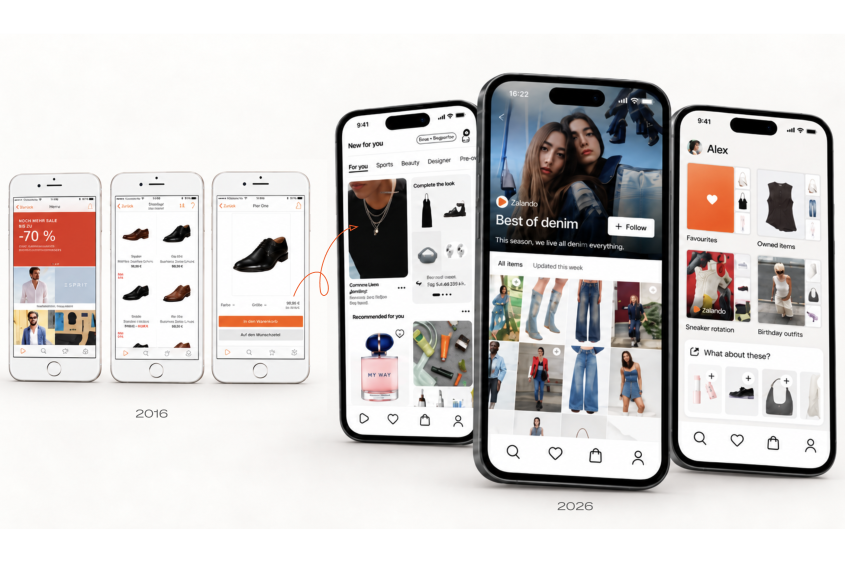
The digital landscape around it changed just as dramatically. Zalando was already strongly mobile in 2016: 65.6% of visits came from mobile devices, while its app was expanding beyond product search with editorial content and video. At the same time, social media was becoming a much more important route into fashion, with Bread&&Butter itself bringing more than 200 international influencers to Berlin in 2017. The pandemic accelerated that shift further, while creators, social platforms, content and commerce became increasingly intertwined.
Now AI is changing that journey again. AI itself is not new to Zalando: machine learning has been used for years across recommendations, forecasting and Size & Fit. What is new is how directly customers experience it. Personalised Feed, Zalando Assistant, AI-powered size recommendations are now part of the daily shopping journey, while generative AI is helping Zalando create content faster and respond more quickly to local trends and cultural moments.
Ten years on, Zalando is not only operating at a different scale. The journey from inspiration to product has changed too – from search and social discovery towards increasingly personalised, conversational and AI-powered experiences.
Why offline matters again
But as digital discovery becomes more sophisticated, the story is not becoming purely digital. Offline experiences are gaining new relevance as people look for more opportunities to connect around shared interests and culture beyond the screen. Zalando has been exploring this through formats such as The Corner and Kids’ Playground, as well as activations around cultural and sports moments including LAAX and the Berlin Marathon.
That makes the view from 2026 feel unexpectedly full circle. A decade ago, Bread&&Butter brought digital commerce into a physical cultural experience. Today, technology is far more advanced, but the role of physical experiences in creating connection, relevance and community is becoming important again.
And for Zalando, that conversation is far from over. We’ll have more to share soon about how we’re thinking about bringing fashion, culture and community together in the physical world again.